Everyday & entry premium
Seiko vs. Tissot: How to Compare Two Broad Everyday Watch Ranges
A framework for comparing Japanese breadth with Swiss everyday appeal.
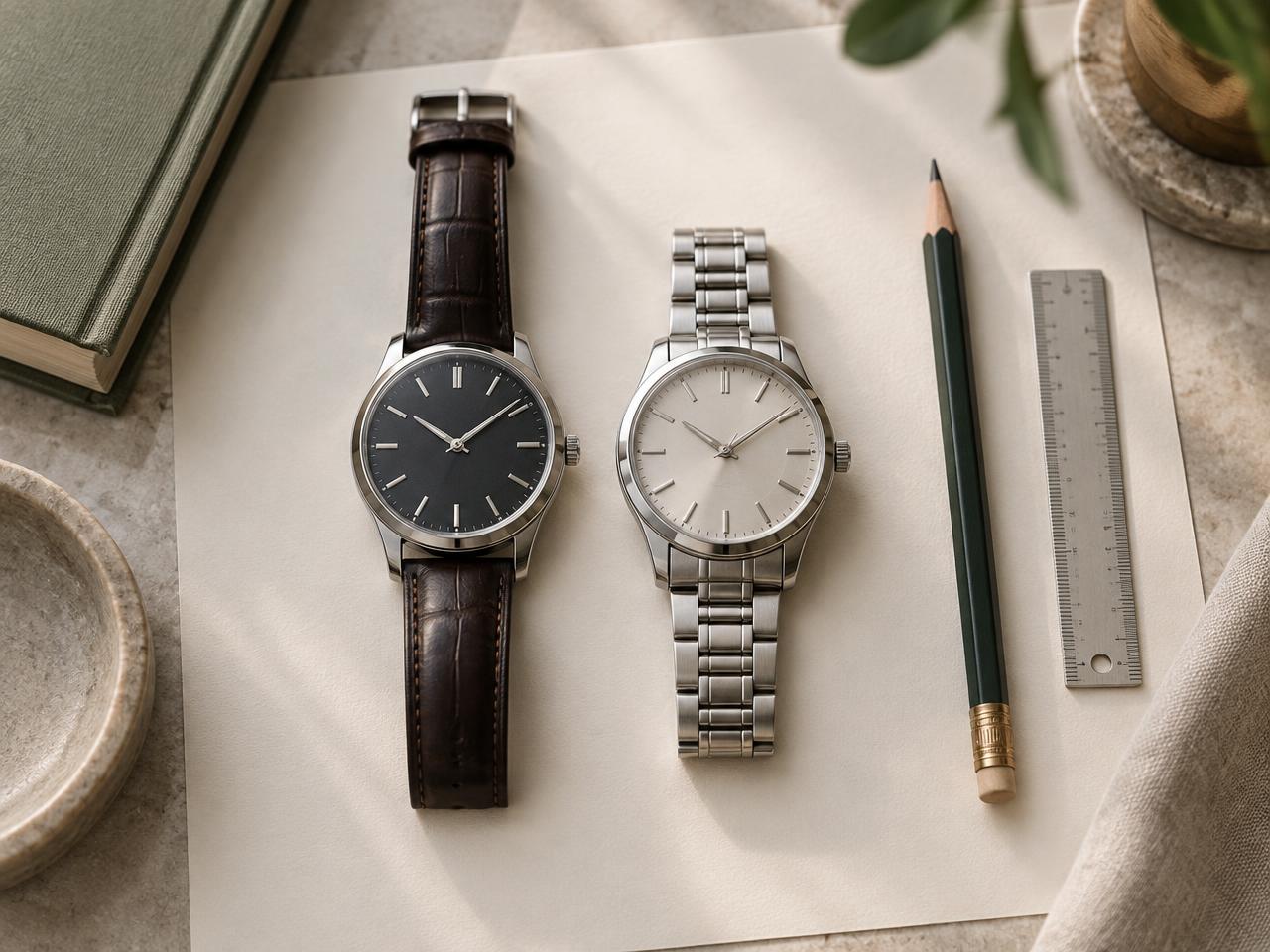
Editorial illustration · product designs shown are unbranded
Seiko and Tissot both span numerous designs and movements. The strongest comparison is not country of origin; it is which exact watch fits your design preference, wrist and ownership expectations.
The short answer
- Both ranges are too broad for a single brand-level specification claim.
- Compare movement, dimensions and finishing only at exact-reference level.
- Use design, fit and seller confidence as the final filters.
| Consideration | Seiko | Tissot |
|---|---|---|
| Brand lens | Japanese watchmaking across a very broad range | Swiss watchmaking across classic and sport styles |
| Movement check | Varies by collection and reference | Varies by collection and reference |
| Best comparison unit | One exact reference against a like-for-like alternative | One exact reference against a like-for-like alternative |
Section 01
Compare like with like
Set a similar use case, movement category, size range and budget before comparing details. Otherwise the wider catalogue can make the search feel busy without making it clearer.
Section 02
Use design as a legitimate criterion
Dial texture, case finishing and bracelet feel are part of the ownership experience. If one design consistently draws you back, that is useful evidence—provided the practical checks also pass.
Section 03
Finish with seller and service checks
Verify the exact reference, warranty provider, return conditions and service route. Availability and pricing can vary by market, so confirm the final offer directly with the retailer.
Continue your research
Browse current options.
These tagged links open Amazon search results. Listings, sellers, prices and availability can change; verify the exact model before purchasing.
Affiliate links · As an Amazon Associate we earn from qualifying purchases.